
Laptop Upgrade Guide
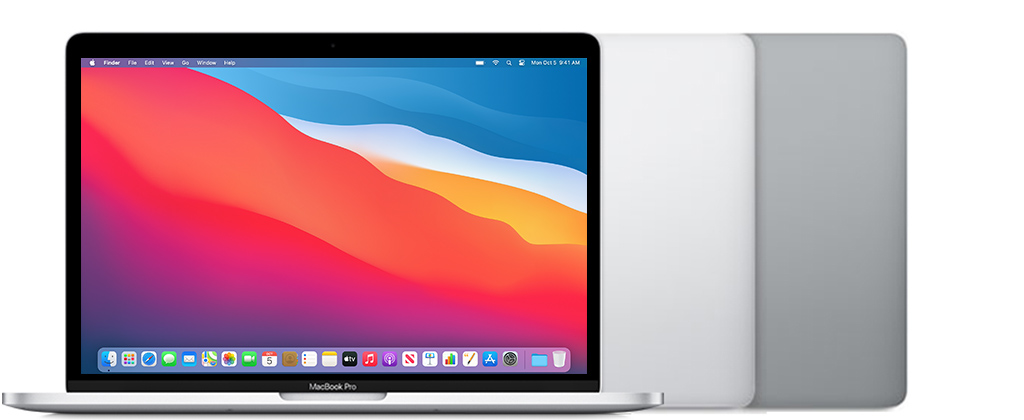
Apple MacBook Pro 13 M1 2020
Model A2338 · Released 2020
- Max RAM
- 16 GB
- RAM Slots
- Soldered (0 Slots)
- Storage Slots
- Not user-replaceable
Can you upgrade this laptop?
Memory on documented Apple MacBook Pro 13 M1 2020 configurations uses soldered modules and cannot be expanded after purchase.
Internal storage is soldered or not documented as user-replaceable.
All findings below are cross-referenced against 3 cited manufacturer or technical documents.
Standard Configuration
Memory
Not upgradeable (soldered)
Maximum 16 GB
8 GB soldered onboard
Storage
Not user-replaceable
Standard Manufacturer Spec — Verify by Serial Number
Battery
Not documented as replaceable
58.2 Wh
Recommended Upgrade Parts
Shop compatible upgrades for Apple MacBook Pro 13 M1 2020
Because system memory is soldered on this model, focus on expanding compatible SSD storage and keeping precision teardown tools on hand.
System memory cannot be upgraded on this model; expand storage with a verified M.2 NVMe SSD.
Disclosure: As an Amazon Associate, we earn from qualifying purchases at no extra cost to you.
Technical Upgrade Walkthrough
Apple MacBook Pro 13 M1 2020 Memory & Storage Architecture Guide
1. Memory Architecture & Dual-Channel Performance
The Apple MacBook Pro 13 M1 2020 ships with LPDDR onboard memory soldered directly onto the motherboard and does not provide any user-accessible SO-DIMM expansion slots. Memory capacity is fixed at purchase (up to 16 GB configured at the factory) and cannot be upgraded later by consumers or repair shops without specialized board-level micro-soldering. Buyers or current owners needing headroom should rely on fast NVMe scratch storage and lean background processes instead.
Because onboard LPDDR onboard memory packages are wired directly beside the processor, the Apple MacBook Pro 13 M1 2020 already operates in a high-bandwidth multi-channel configuration optimized for low latency and strong power efficiency. While you cannot swap or add physical memory sticks after delivery, keeping at least 15% to 20% of your primary SSD free ensures virtual memory swap files remain responsive under heavy multitasking, container builds, or photo editing workloads.
2. M.2 NVMe Storage Expansion & Thermal Management
Storage on the Apple MacBook Pro 13 M1 2020 uses soldered flash packages directly on the main logic board or is documented as non-user-replaceable, meaning there are no standard M.2 NVMe sockets available for internal DIY swaps. Because storage capacity cannot be expanded internally after purchase, selecting the right factory tier upfront—or managing local project files cleanly—is essential for long-term usability.
If your workflow outgrows the internal drive on the Apple MacBook Pro 13 M1 2020, high-speed external Thunderbolt or USB-C NVMe enclosures offer near-internal sequential read and write performance without opening the chassis. Choose an aluminum enclosure with an integrated silicone thermal pad so external SSDs sustain transfer speeds during 4K video scrubbing or large archive backups without thermal throttling.
3. 5-Step Safe Hardware Installation Checklist
- 1
Shut Down & Disconnect Internal Power
Perform a full operating system shutdown instead of Sleep or Hibernate, unplug the AC adapter and USB-C peripherals, remove the bottom panel, and carefully disconnect the internal battery cable (or toggle the BIOS battery-disable option) before touching any internal components.
- 2
Observe ESD Protection & Grounding
Work on a clean, hard, non-carpeted desk surface, touch an unpainted grounded metal chassis screw before handling hardware, wear an anti-static strap if available, and hold memory or NVMe modules strictly by their non-conductive PCB edges.
- 3
Remove the Bottom Cover Safely
Use a precision screwdriver bit matching the exact Torx or Phillips chassis fasteners, map screws by length on a magnetic tray, and release perimeter plastic retention clips gently with a nylon pry tool without flexing the palmrest deck.
- 4
Insert Modules at a 45-Degree Angle
Align the gold-pin key notch with the motherboard socket, slide SO-DIMM sticks or M.2 NVMe drives firmly into place at roughly a 30 to 45 degree angle, then press down flat until side latches click or the M.2 retention screw seats cleanly.
- 5
Reconnect Battery & Allow BIOS Memory Training
Reattach the internal battery cable, verify any SSD thermal pad makes contact, secure the bottom cover, and power on; wait 30 to 90 seconds on the first boot while BIOS/UEFI completes memory training before expecting display output.
Sources
MacBook Pro (13-inch, M1, 2020) — Apple Technical Specifications
Apple · official_specs
Apple MacBook Pro (13-inch, M1, 2020) Technical Specifications
Apple · official_specs
M1 MacBook Pro and Air Teardowns
iFixit · trusted_teardown
See an outdated specification or missing sub-model detail? Report a source-backed correction.
Frequently Asked Questions
What is the maximum RAM supported by Apple MacBook Pro 13 M1 2020?
The Apple MacBook Pro 13 M1 2020 tops out at up to 16 GB of LPDDR onboard memory. Memory is soldered directly to the motherboard (0 upgradeable SO-DIMM slots) and cannot be expanded after purchase.
Does Apple MacBook Pro 13 M1 2020 have an extra M.2 SSD slot for storage upgrade?
No. Internal storage on the Apple MacBook Pro 13 M1 2020 is soldered or non-user-replaceable, with no standard M.2 or 2.5-inch expansion slots documented—use high-speed Thunderbolt or USB-C external NVMe SSDs instead.
What RAM speed and type does Apple MacBook Pro 13 M1 2020 use?
The Apple MacBook Pro 13 M1 2020 uses soldered LPDDR onboard memory, wired in a multi-channel factory layout that cannot be swapped with SO-DIMM modules.
Is it safe to upgrade the RAM and SSD on Apple MacBook Pro 13 M1 2020 yourself?
Yes, as long as you follow basic precautions: power the Apple MacBook Pro 13 M1 2020 completely off, unplug the AC charger, and disconnect the internal battery cable before touching the motherboard. Use a precision Torx/Phillips driver and a nylon spudger so bottom-cover plastic clips do not snap (and under the US Magnuson-Moss Warranty Act, upgrading compatible parts will not void Apple's base warranty unless physical damage occurs). Check compatible parts above in Recommended Upgrade Parts (#recommended-upgrades).
Related / Similar Laptop Upgrade Guides
Compare memory limits, SO-DIMM slots, and M.2 NVMe expansion across similar models.
Apple MacBook Pro 13 Intel 2020 RAM & SSD Upgrade Guide
Soldered RAM · Soldered Storage
Apple MacBook Pro 16 Intel 2019 RAM & SSD Upgrade Guide
Soldered RAM · Soldered Storage
Apple MacBook Pro 16 M1 2021 RAM & SSD Upgrade Guide
Soldered RAM · Soldered Storage
Apple MacBook Air Intel 2020 RAM & SSD Upgrade Guide
Soldered RAM · Soldered Storage
Apple MacBook Air M1 2020 RAM & SSD Upgrade Guide
Soldered RAM · Soldered Storage
HP ProBook 440 G8 RAM & SSD Upgrade Guide
Up to 32 GB DDR4 · 1 M.2 Slot
Check your upgrade compatibility
Want to check a specific RAM or SSD capacity for this model? Open the interactive checker with Apple MacBook Pro 13 M1 2020 pre-selected.
Open Laptop Upgrade Checker